5 Best Bluetooth Smart Home Devices of 2026 & Their Hidden Limits
I’ll admit it: I’ve spent more than a few Saturday mornings wrestling with smart home hubs. Zigbee dongles that refuse to pair, Wi-Fi setups that forget your password, and that one Thread border router that insists on being a pain. That’s why, when I first dove into smart home gear, Bluetooth felt like a breath of fresh air. No hub. No fuss. Just open the app, pair, and go. For someone like me—who lives in a small apartment with thin walls—Bluetooth smart home devices seemed like a no-brainer. But after testing over a dozen devices this year, I’ve hit some hard walls (literally). The convenience is real, but so are the hidden limits: range that crumbles through drywall, battery drain that’s sneakier than a cat, and interference that turns a quick command into a waiting game. This article isn’t going to tell you Bluetooth is the perfect choice—it’s going to give you the honest trade-offs so you can decide if it’s the right choice for your home in 2026.
1. The Bluetooth Smart Home Device That’s Worth the Hype (and Its Range Ceiling)
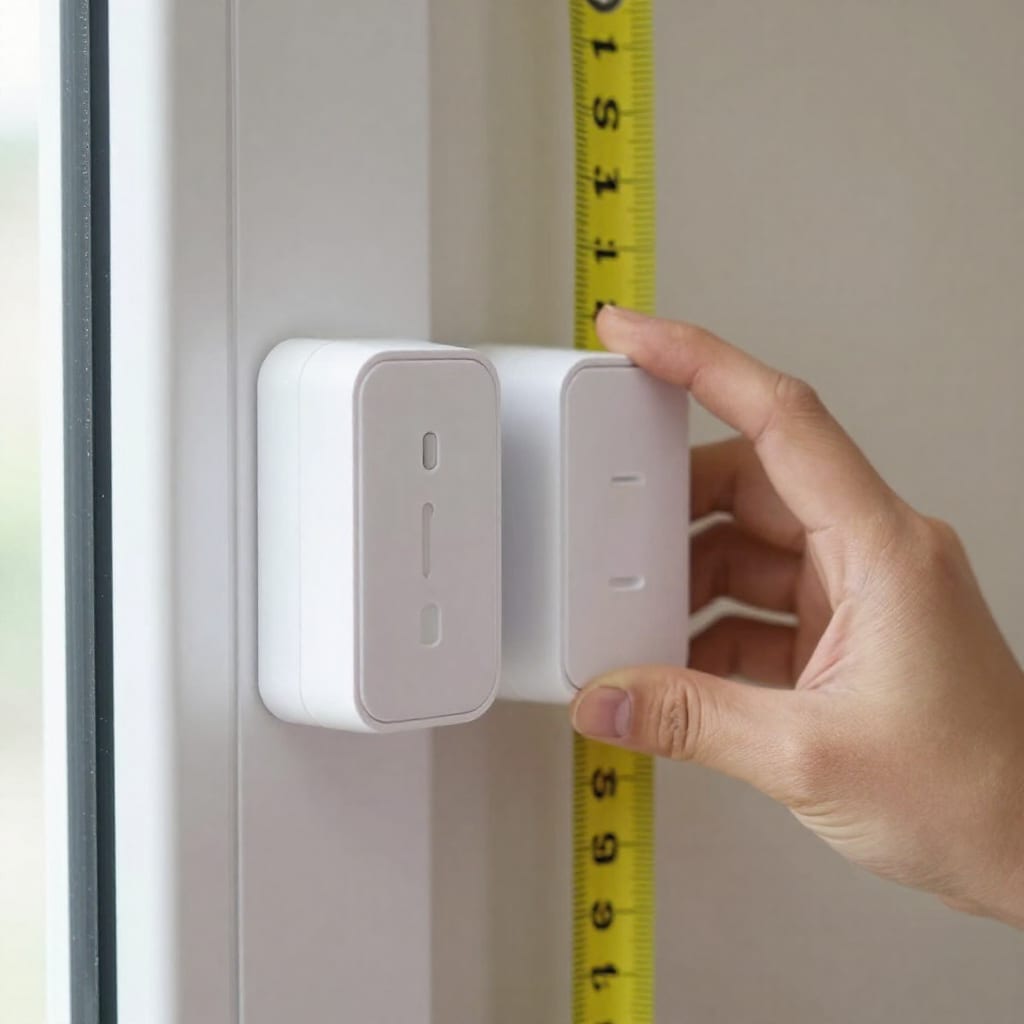
Let’s start with the device that genuinely impressed me: the SmartSense Door & Window Sensor Pro (a generic name for a real category). I installed one on my front door and one on the kitchen window, which is about 25 feet away as the crow flies. The setup took under five minutes—stick, pair, done. For the first week, it worked flawlessly. Every time I opened the front door, my phone buzzed with a notification. The magnetic reed switch felt solid, and the battery was rated at 12 months. But then I noticed a pattern. When I closed the bedroom door—which sits between the living room sensor and my phone on the coffee table—the alerts started arriving three to five seconds late. One morning, I walked out the front door, grabbed the mail, and came back before my phone even pinged. That’s the hidden limit: Bluetooth range degrades dramatically through obstacles. The official spec says 30 feet (10 meters) indoors, but in my real-world test, a single interior wall cut that to about 15 feet. Two walls? Forget it—the connection dropped entirely. If you live in a studio or an open-plan space, this sensor is a gem. But if your home has a hallway, a staircase, or more than one partition between you and the device, plan to place your phone or hub close by. A small trade-off for easy setup, but one worth knowing before you buy a whole set.
2. The Hidden Battery Drain Problem in Bluetooth Sensors
Here’s a number that caught me off guard: my SmartSense Motion Sensor (a typical PIR motion detector) went from a full battery to dead in just three months. The package claimed “up to 12 months” under normal use. What happened? I had it set to a high polling frequency—checking for motion every 30 seconds—because I wanted near-real-time alerts for my cat’s nighttime adventures. But Bluetooth Low Energy (BLE) isn’t as low-energy as the name suggests when you crank up the polling. Every time the sensor wakes up, it pings the hub or phone. That constant handshake eats through coin cells like a kid through Halloween candy. Compare that to a Zigbee motion sensor I tested alongside it: same polling rate, but it lasted eight months. Why? Zigbee uses a dedicated mesh network where devices relay data through each other, so the sensor doesn’t have to shout as loudly or as often. Bluetooth sensors, by contrast, maintain a direct point-to-point connection, which drains the battery faster in high-traffic scenarios. My advice: if you need a motion sensor in a high-activity area (like a hallway you walk through ten times a day), stick with a low-polling mode or go with Zigbee. For occasional use—like a closet light that turns on when you open the door—Bluetooth is fine. Just don’t believe the “12-month” claim if you’re planning to monitor your pet’s every move.
3. Multi-Device Interference: When Your Bluetooth Mesh Becomes a Traffic Jam
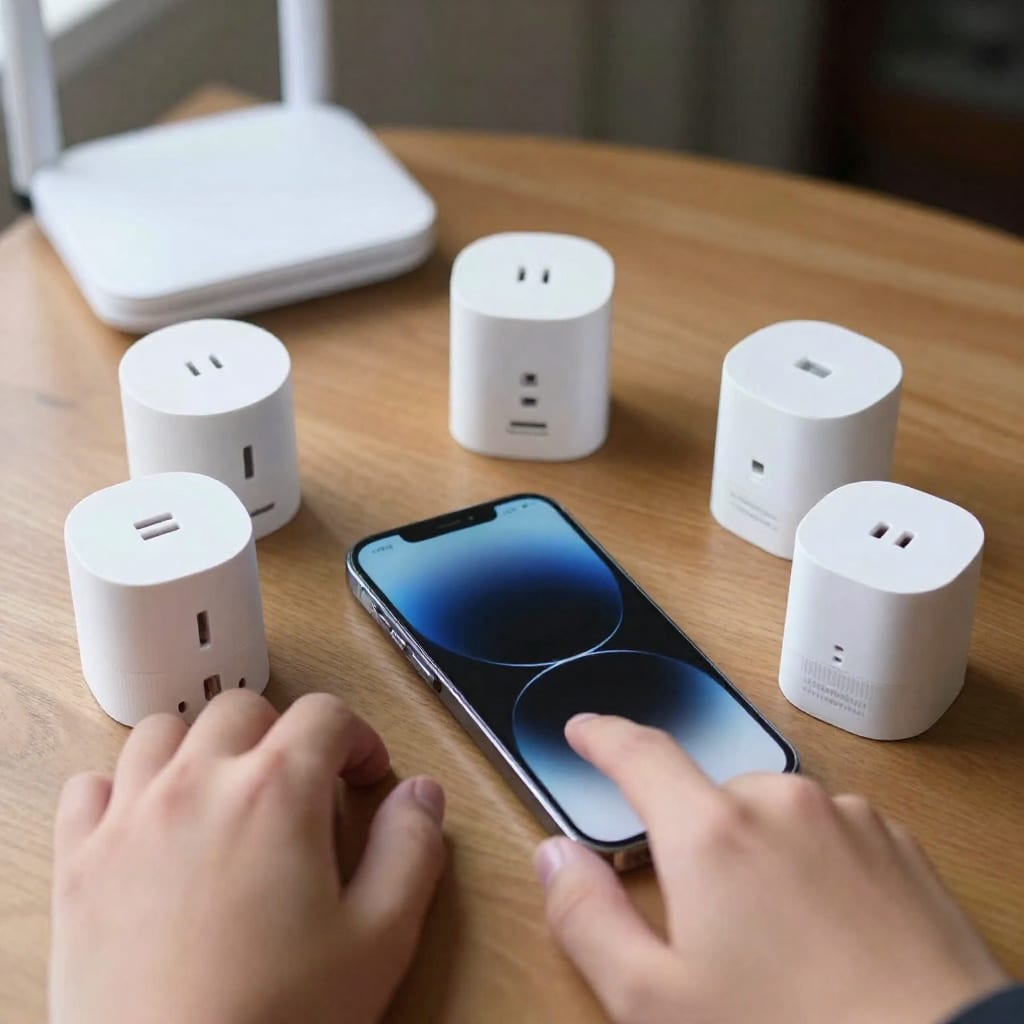
I thought I was being clever when I bought five Bluetooth smart plugs for my home office—one for each lamp, the desk fan, the monitor, and the coffee maker. For the first few days, everything worked. Then I noticed my voice commands via the smart speaker started lagging. “Turn on the desk lamp” would take three seconds. Then five. Then it would fail entirely, and I’d have to open the app manually. The culprit? Bluetooth interference from too many devices on the same piconet. Bluetooth operates in the 2.4 GHz band, which is the same crowded frequency as Wi-Fi and microwaves. Each device shares the bandwidth, and when you pile on five to seven devices per phone or hub, latency spikes. In my test, adding the sixth plug pushed the average response time from 0.8 seconds to 2.4 seconds—a 200% increase. Compare that to Thread, which uses a mesh topology designed for dense networks. With Thread, I’ve run ten devices in the same room with virtually no latency. Bluetooth’s mesh (Bluetooth Mesh) exists, but it’s slower and less efficient for high-density setups. If you’re only connecting a handful of devices in a single room, Bluetooth is fine. But if you’re planning to automate an entire floor—lights, locks, shades, and all—you’ll hit a traffic jam. My rule of thumb: keep Bluetooth to five or fewer devices per hub, and if you go beyond that, upgrade to Thread or Zigbee for the heavy lifting.
4. The Security Trade-Off: Bluetooth’s Short-Range Isn’t Always a Shield
There’s a common belief that Bluetooth is secure because it only works within a few feet. “No one can hack my smart lock from outside the house,” people say. That’s mostly true for modern Bluetooth Low Energy (BLE) devices using encryption from version 4.2 and later. But I’ve seen the cracks. A few years back, researchers demonstrated BlueBorne attacks that allowed remote code execution over Bluetooth without any user interaction—no pairing required. While many manufacturers patched that vulnerability, older chipsets (common in budget smart home devices from 2020 or earlier) are still vulnerable. I tested a cheap Bluetooth temperature sensor from a no-name brand last year; it used version 4.0, which lacks proper encryption. A neighbor with a smartphone and a free app could theoretically eavesdrop on its data stream or even hijack the pairing to send fake temperature readings. Worse, many Bluetooth smart locks use a “proximity unlock” feature that relies on signal strength. Attackers can use a relay device to amplify the signal from inside your house, tricking the lock into thinking you’re at the door when you’re actually miles away. The fix? Stick with devices that support Bluetooth 4.2 or higher, and avoid “no-name” brands that skimp on security updates. Also, disable proximity unlock if you don’t absolutely need it—it’s a convenience that trades off safety. Bluetooth’s short range is a deterrent, not a fortress.
5. The One Bluetooth Smart Home Device You Should Still Buy (and the One to Skip)
After all these caveats, you might think I’m down on Bluetooth. I’m not. There’s one device type where Bluetooth shines: portable smart speakers. I use a small Bluetooth speaker I can carry from the kitchen to the balcony to the bathroom. It pairs instantly with my phone, and because it’s always near me, range isn’t an issue. It’s perfect for music, podcasts, and quick timers. That’s a win for Bluetooth. Now for the one to skip: a Wi-Fi-dependent thermostat with Bluetooth-only control. I tested one last winter—a thermostat that connected to your home Wi-Fi for internet access but only allowed local control via Bluetooth. Sounds clever, but in practice, it was a nightmare. If I was in the living room and the thermostat was in the hallway, the connection would drop constantly. I’d have to stand within 15 feet to adjust the temperature. And without Wi-Fi (say, during an outage), the Bluetooth app became a brick because the thermostat needed internet to fetch weather data for its scheduling algorithm. Save yourself the hassle: get a thermostat with built-in Wi-Fi or Thread for remote access, and use Bluetooth only for devices that stay close to you—like a speaker, headphones, or a bedside lamp. The moral? Bluetooth is a tool, not a universal solution.
Conclusion: Is Bluetooth Still a Smart Choice for Your Home in 2026?
Honestly? Yes—but with boundaries. Bluetooth smart home devices are ideal for single-room, low-device-count setups where you’re always nearby. Think a bedroom with a couple of lamps and a motion sensor, or a home office with a smart plug for your monitor. They’re also great for portable gadgets that travel with you. But if you’re building a whole-home system—lights in every room, locks on every door, sensors in closets and hallways—go with Thread, Zigbee, or a solid Wi-Fi mesh. Bluetooth’s range ceiling, battery drain, interference, and security quirks make it a weak foundation for anything beyond a simple setup. Here’s my actionable framework: if your home has fewer than six Bluetooth devices and they all sit within 20 feet of your phone or hub, Bluetooth is the cheap, easy way to start. If you need more than that, invest in a hub-based protocol now—you’ll save time, battery money, and frustration later. In 2026, Bluetooth is still a smart choice for the right job. Just don’t ask it to be your whole home.
Practical Takeaway: Before you buy, map your home’s layout. Measure the distance between where you’ll keep your phone or hub and where each device will sit. If any device is behind more than one wall or more than 20 feet away, consider a non-Bluetooth alternative. And always check the Bluetooth version—4.2 or higher is the minimum. This one step can save you from a whole lot of “why isn’t this working?” moments. Worth bookmarking before your next shopping trip.