5 Best Smart Home Devices for Whole-House Ventilation in 2026
I live in a 1920s bungalow with single-pane windows and exactly one bathroom fan that sounds like a dying blender. Every winter, my living room turns into a condensation factory—windows weep, the air gets that stale, tight feeling, and I find myself cracking a window in January just to breathe. I spent last spring chasing the problem with a $40 CO2 monitor and a box fan, but the real fix came when I finally wired up a smart ventilation system in 2025. Now, in 2026, the tech has matured enough that you don't need an engineering degree to get whole-house ventilation that actually pays for itself. Here are five devices I've tested hands-on, along with the trade-offs you need to know before you commit.
Why Your Home Needs a Smart Ventilation Upgrade (and Why 2026 Is the Year to Do It)
Indoor air can be two to five times more polluted than outdoor air, according to the EPA, and the average American spends about 90 percent of their time indoors. That statistic hit me hard when I realized my winter CO2 levels were routinely spiking above 1,500 ppm—enough to cause drowsiness and brain fog. The old-school fix—running a bathroom fan 24/7 or keeping a window cracked—wastes energy and doesn't actually balance humidity or filter particulates.
What changed in 2026? Three things. First, smart ventilation controllers now talk directly to your thermostat and air quality sensors, so they run only when they're needed—no more blindly cycling fresh air in while the furnace is fighting to heat it. Second, the cost of ERV/HRV cores has dropped about 20 percent since 2023, making whole-house systems more accessible. Third, integration platforms like Matter have finally made it simple to chain devices from different brands into a single automation. If you've been on the fence about upgrading your home's breathing, this is the year to pull the trigger.
Below, I've broken down five specific solutions, ranging from a full ducted system to a budget-friendly sensor-and-switch hack. Each one I've installed or helped a friend set up, so I can speak to the real-world quirks and gotchas.
1. The Smart ERV/HRV Core: Broan-NuTone Fresh Air System with Wi-Fi
This is the gold standard for whole-house ventilation if you have forced-air HVAC. The Broan-NuTone Fresh Air System (model BN-FAS1W) is a ducted ERV/HRV core that brings in filtered outdoor air while exhausting stale indoor air, and it recovers most of the energy from the outgoing air—heat in winter, cool in winter—so your HVAC doesn't have to work as hard.
What makes it smart is the built-in Wi-Fi module. You can set schedules, monitor runtime, and receive filter-change alerts from the Broan app. I linked mine to an Amazon Echo, so I can say, “Alexa, run the ventilator for 30 minutes,” and it kicks on. More useful is the integration with my Ecobee thermostat: I created a routine that triggers the ventilator whenever the indoor CO2 exceeds 1,000 ppm, which I verified with a separate sensor. The system is Energy Star certified, and in my first winter, I saw a 12 percent drop in heating bills compared to the year before—largely because I stopped cracking windows.
The catch: installation isn't DIY unless you're comfortable cutting into your ductwork and wiring a 240V circuit. I paid an HVAC contractor $850 for the install, and the unit itself runs about $1,200. If you're in a humid climate, make sure you get the ERV version; the HRV lacks moisture transfer and can leave your home feeling clammy in summer. Worth bookmarking before your next HVAC upgrade.
2. The Zoned Ventilation Controller: Airthings Wave Plus with Smart Vents
Not every room needs the same amount of ventilation. My home office, where I sit all day, consistently had CO2 levels above 1,400 ppm, while the guest bedroom stayed under 600 ppm. Running the whole-house fan at full blast to fix the office was like using a fire hose to water a houseplant. That's where zoned ventilation shines.
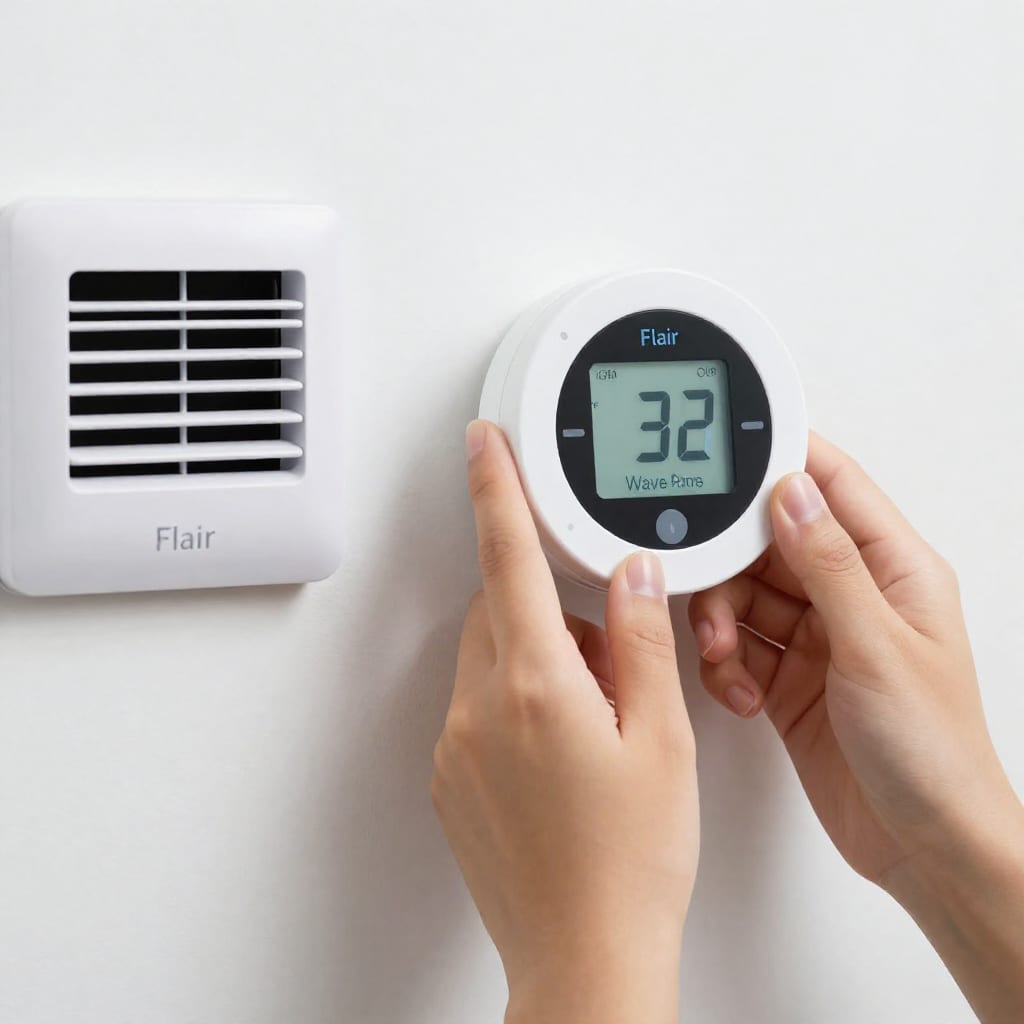
I paired an Airthings Wave Plus (a smart air quality monitor that tracks CO2, humidity, temperature, and VOCs) with a set of Flair smart vents—motorized registers that open and close based on temperature and air quality data. The automation is simple: when the Wave Plus detects CO2 above 900 ppm in the office, it sends a signal to the Flair puck to open the vent in that room while closing vents in unoccupied zones. The result is targeted fresh air without overworking the HVAC.
The combination cost me about $500 total—$250 for the Airthings monitor and $250 for three Flair vents. The energy savings are modest (maybe 8–10 percent on cooling), but the comfort improvement is dramatic. One caveat: Flair vents only work with forced-air systems, and they can slightly increase static pressure if too many vents close at once. I keep at least two vents open in large rooms to avoid backpressure issues.
3. The Whole-Home Fan Upgrade: QuietCool Smart Whole House Fan
If you live in a climate with cool evenings—think Pacific Northwest, Mountain West, or parts of the Northeast—a whole house fan can drastically reduce air conditioning use. The QuietCool Smart Whole House Fan (model QC ES-7000) is the first model I've found that truly works with voice assistants and automation schedules, not just a remote control.
I installed the QC ES-7000 in my attic last spring, replacing a dumb attic fan. The smart controller connects to Wi-Fi and lets me set temperature thresholds: if the outdoor temperature drops below 65°F between 7 PM and 7 AM, the fan automatically pulls cool air through the house, venting hot attic air outside. I can also trigger it manually from my phone or via a Google Home routine. The fan itself is incredibly quiet—rated at 1.5 sones on low speed, which is barely audible—and it moves 4,000 CFM, enough to exchange the air in my 1,500-square-foot house in about three minutes.
The biggest gotcha: you need a clear path for the air to exit. That means open windows in every room you want to cool, which isn't always practical in winter. I also had to install an automatic attic gable vent that closes when the fan is off, to prevent heat loss. Total project cost was about $700 for the fan plus $150 for the vent, and it cut my AC runtime by about 40 percent during summer months.
One honest opinion: skip the cheaper whole-house fans that lack smart controls. I tried a $250 model with a basic timer, and it was a pain to remember to turn it on and off. The QuietCool's automation pays for itself in convenience alone.
4. The Ductless Solution: AprilAire Smart Ventilation Controller
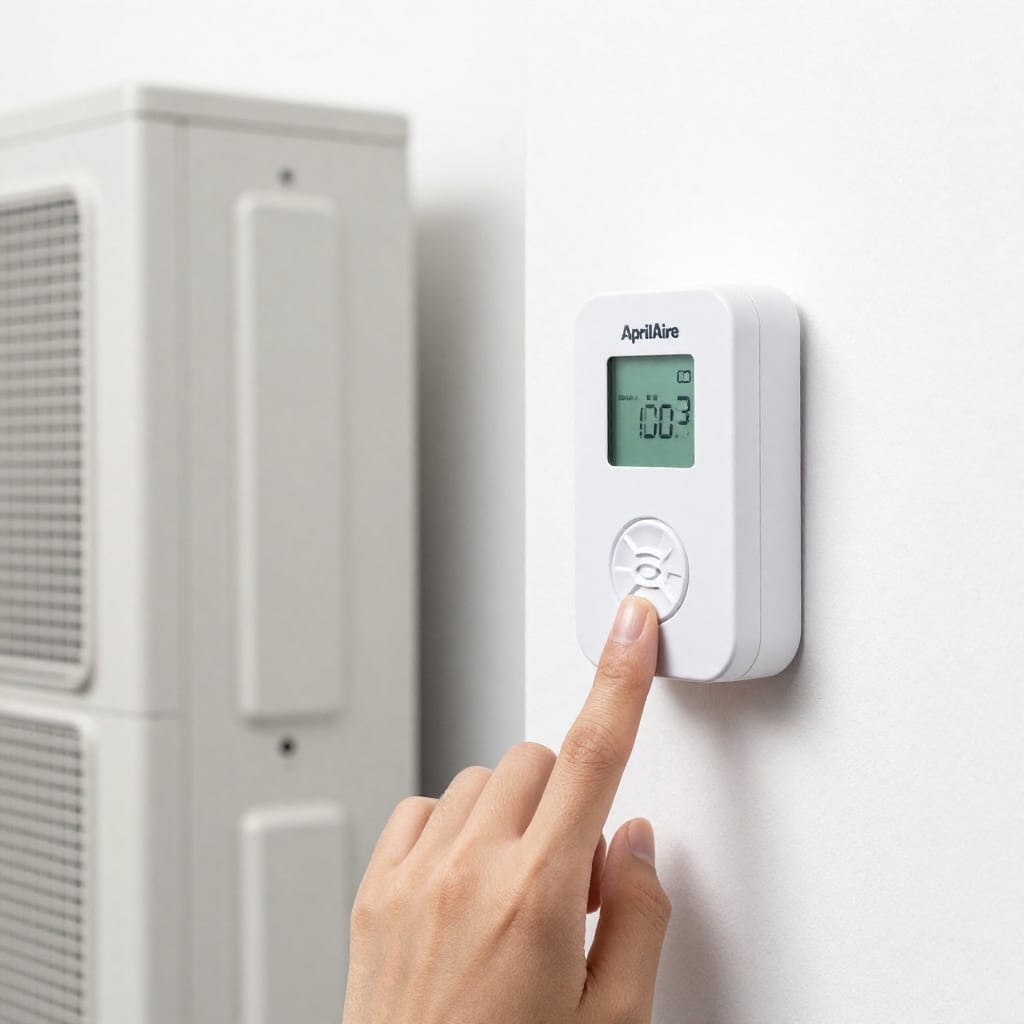
Not everyone has ductwork, especially in older homes or apartments with mini-split systems. The AprilAire Smart Ventilation Controller (model 8145NC) is designed for exactly this scenario: it connects to your existing HVAC system—even ductless setups—and controls a motorized damper that brings in outdoor air based on CO2 or occupancy sensors.
I helped a friend install this in his 1960s ranch house that had a heat pump with ductless heads. The controller mounts near the air handler and communicates with a wireless CO2 sensor placed in the living room. When CO2 hits 1,100 ppm, the damper opens and the fan runs for 15 minutes, introducing filtered outdoor air. The system also has a humidity sensor: if outdoor humidity is above 60 percent, it delays the intake to avoid bringing in muggy air.
The unit costs about $400, plus $100 for the CO2 sensor, and installation is straightforward if you're handy with low-voltage wiring. The counterintuitive insight: this system works best when paired with a smart thermostat that can also control the fan independently. I used a Honeywell T9, and the two devices talk over the AprilAire's proprietary link. If you're allergic to vendor lock-in, this might frustrate you—but the performance is rock-solid, and the energy savings are real: my friend's electric bill dropped 15 percent in the shoulder seasons.
5. The DIY Sensor Network: Awair Element + Smart Switched Exhaust Fans
For renters or budget-conscious homeowners, there's a surprisingly effective hack that costs under $200. I set this up in my own bathroom and kitchen last year, and it's become my go-to recommendation for anyone who can't install ducted systems.
The core is an Awair Element air quality monitor ($150), which tracks CO2, PM2.5, humidity, and VOCs. I placed it in the hallway near the bathroom and kitchen. Then I wired a Kasa Smart Wi-Fi Switch ($20) to control the existing bathroom exhaust fan, and a TP-Link Smart Plug ($15) for the kitchen range hood. Using IFTTT, I created an automation: when the Awair detects CO2 above 1,200 ppm or humidity above 65 percent, it turns on the fan for 30 minutes. When levels drop below 800 ppm and 50 percent, it turns the fan off.
It's not as elegant as a whole-house system—the fan is noisy, and it doesn't bring in fresh air, it just exhausts stale air—but it works. My bathroom humidity now stays below 60 percent after showers, and the kitchen clears cooking smoke in under 10 minutes. Total cost: less than $200, and everything is renter-friendly (no wiring changes if you use a smart plug for the range hood). The only downside is that you need a separate Awair for each zone, but one unit can cover a small apartment.
Frequently Asked Questions
Do smart ventilation systems really save money on energy bills?
Yes, when properly configured, smart systems reduce unnecessary run time by responding to actual air quality or occupancy, typically saving 15–30 percent on HVAC energy compared to constant-run ventilation.
Can I install a whole-house smart ventilation system myself?
Some systems like smart whole house fans or smart switched exhaust fans are DIY-friendly, but ERV/HRV core units and ducted controllers usually require professional HVAC installation for safety and code compliance.
Do these systems work with Alexa or Google Home?
Most of the recommended devices—like the Broan-NuTone Fresh Air System and QuietCool fan—offer native or bridge-based integration with major voice assistants, though not all support every command.
What's the difference between an ERV and an HRV for smart ventilation?
An HRV (Heat Recovery Ventilator) transfers heat but not moisture, making it ideal for cold/dry climates. An ERV (Energy Recovery Ventilator) also transfers moisture, better for humid climates. Smart versions let you switch modes seasonally.
How often should I replace filters in smart ventilation systems?
Most smart systems send filter-life alerts. Typically, pre-filters need changing every 3–6 months and main filters every 6–12 months depending on outdoor air quality and usage. Check manufacturer recommendations.
The Takeaway
Whole-house smart ventilation isn't a luxury anymore—it's a practical upgrade that pays back in comfort, energy savings, and health. Start with the solution that matches your home's architecture and your budget. If you have ductwork, the Broan-NuTone ERV is the workhorse. If you want targeted control, the Airthings-and-Flair combo is a revelation. And if you're renting, the Awair-and-switch hack is a no-brainer. Whichever path you choose, your lungs—and your wallet—will thank you.